Chris Wise

Computing & Cyber Security Professional

Researching the intersection of machine learning, quantum systems, and high-performance computing. Focused on solving complex computational and physical problems with technical rigour.

First-Class Honours
University Medal
GCIH • GSEC
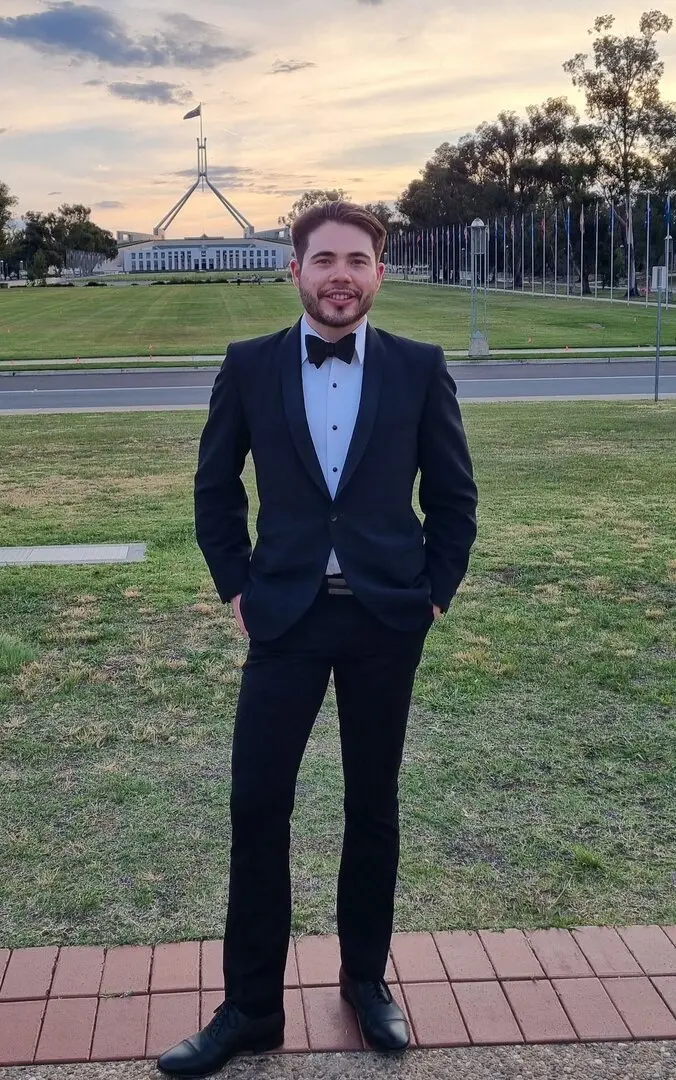
Portrait of Chris Wise in military service uniform

Academic Research & Defence Service

Combining academic research in computing with practical experience.

I am based in Canberra, Australia, serving as a Royal Australian Air Force Officer. I graduated from the University of New South Wales with First-Class Honours in Computing and Cyber Security and was awarded the University Medal.

My academic research focuses on machine learning and quantum computing, including quantum noise characterisation, optimal control, and adversarial robustness.

I am interested in applying machine learning to complex physical systems across quantum technologies, energy, and secure computing infrastructure.

Quantum Computing

Modelling and mitigating decoherence and noise in physical quantum systems.

Cyber Security

Practitioner experience across incident handling, systems architecture, and adversarial ML.

Leadership & Command

Trained in team leadership, risk communication, and technical decision-making.

Decentralised Systems

Researched multi-agent swarm robotics and Byzantine fault-tolerant consensus protocols.

Selected Projects

Preprints, research papers, and open-source code across quantum control, machine learning, and swarm robotics.

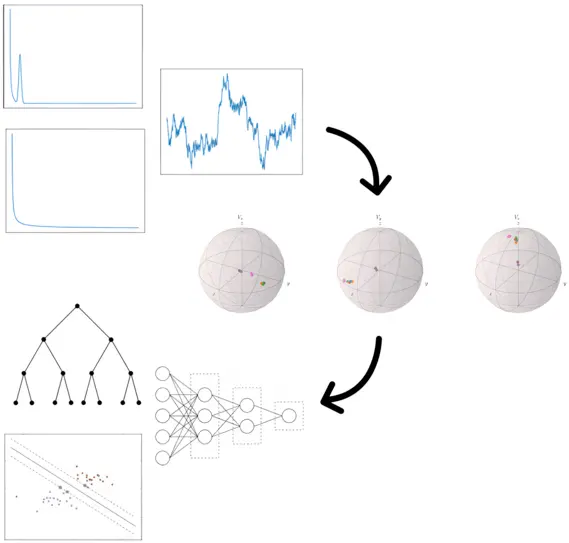
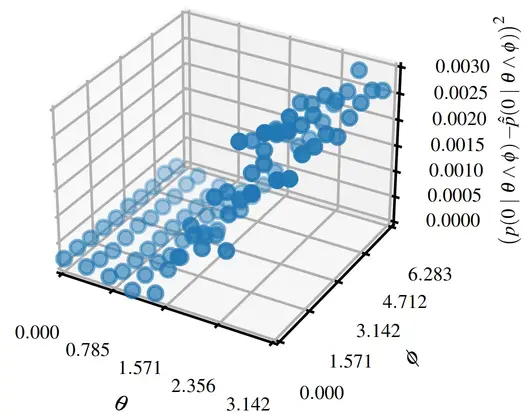
Visualisation of quantum feature space manifold
Quantum Computing Regression ML arXiv:2505.03397

Quantum Feature Space of a Qubit Coupled to a Classical Stochastic Environment

Demonstrates that quantum noise can be inferred using engineered features more efficiently and accurately than deep learning approaches. Introduces a compact parameterisation to characterise complex qubit-environment interactions.
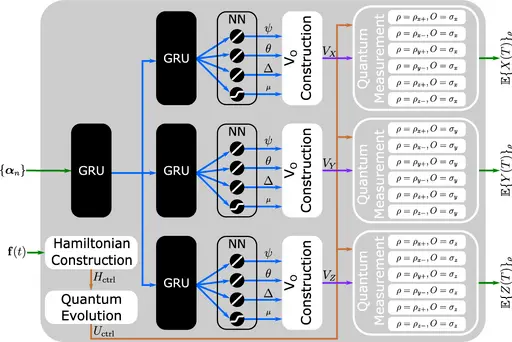
Grey box neural network architecture for qubit control
Honours Thesis Deep Learning Optimal Control

Machine Learning for High Fidelity Qubit Control

Honours thesis extending physical models of qubit-environment interactions to infer system noise from experimental data. Used deep learning and gradient-free optimisation to synthesise control pulses achieving over 99% process fidelity.

Quantum circuit error graphs and fidelity plots
Quantum Circuits PSO Algorithm Error Mitigation

PSO to Infer Quantum Computer Circuit Errors

Calibrated quantum circuit error models against hardware data using Particle Swarm Optimisation (PSO). Reduced simulation mean squared error by 10x, enabling control calibrations that suppressed measured hardware errors by 62%.

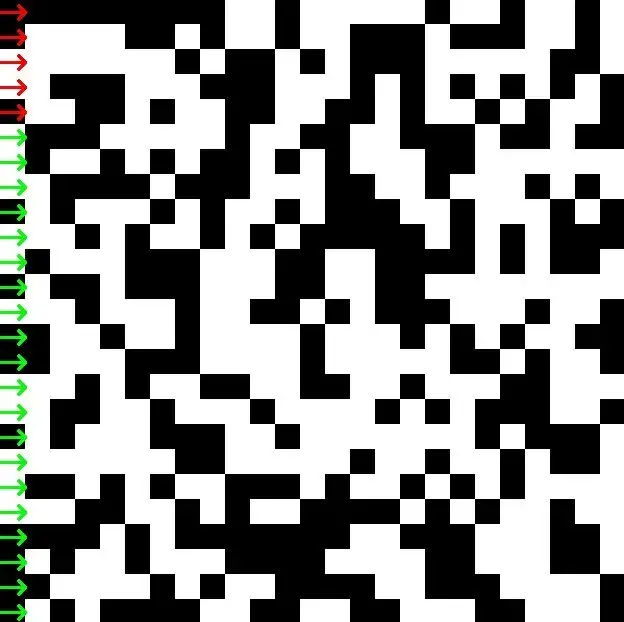
Multi-agent swarm collective perception network
Swarm Robotics Reinforcement Learning arXiv:2211.03063

Developing Decentralised Resilience to Malicious Influence

Investigated collective perception in multi-agent swarms subject to Byzantine faults and adversarial attacks. Used reinforcement learning to dynamically weight peer communications, maintaining robust consensus across the swarm.

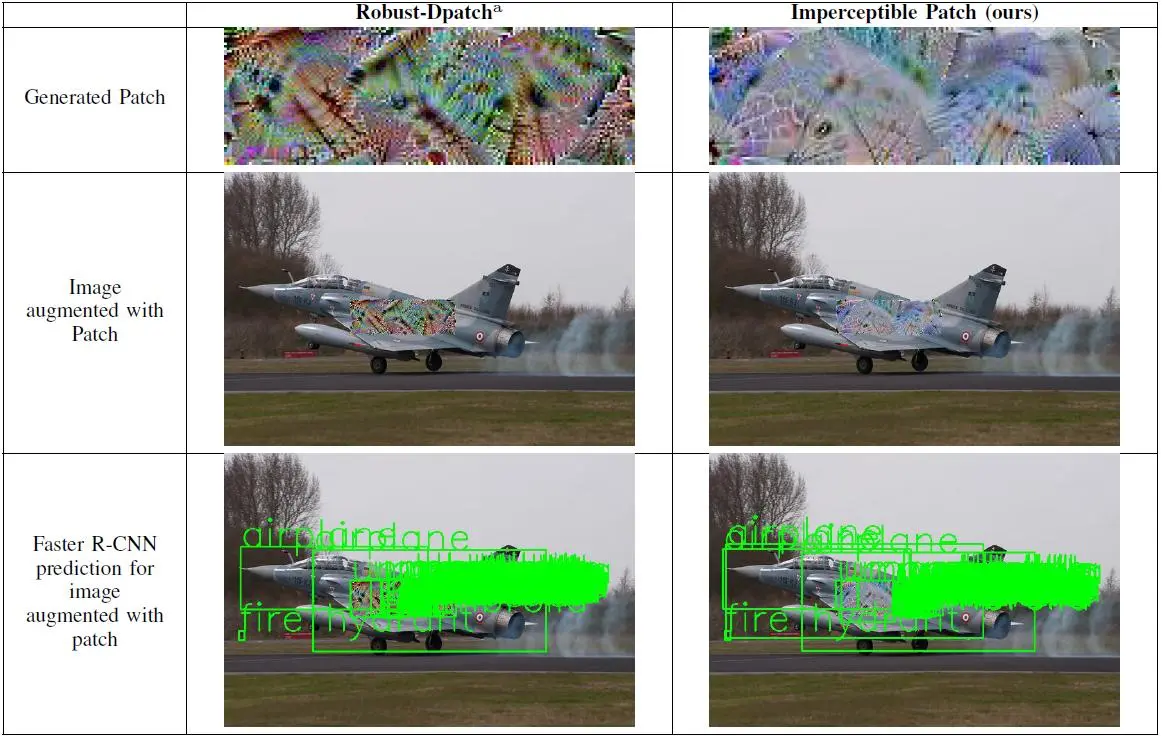
Adversarial patch comparison for computer vision evasion
Adversarial ML Computer Vision arXiv:2202.08892

Adversarial Patches to Camouflage Military Assets

Developed an optimisation pipeline generating adversarial patches that prevent convolutional object detectors from identifying military assets. Formulated joint loss functions to maximise detection error while keeping patch colours perceptually bounded.

Experience & Qualifications

Professional Appointments

Air Force Officer

2024 – Present
Royal Australian Air Force
  • Delivering briefings to commanders and decision-makers
  • Conducting risk assessment and communication
  • Analysing, managing, and interpreting reports
  • Leading and managing personnel
  • Designed and built an isolated intranet integrating analogue-to-digital hardware and zero-client virtual machines for the Defence Science and Technology Group

Quantum Research Intern

Jan 2023 – Apr 2023
Okinawa Institute of Science & Technology (OIST), Japan
  • Researched quantum decoherence and noise modelling within the Quantum Machines Unit
  • Applied machine learning to characterise stochastic noise processes in physical qubits
  • Prepared and delivered technical seminars

Officer Cadet & Support Officer

2020 – 2023
Australian Defence Force Academy (ADFA)
  • Completed military officer training concurrently with full-time academic studies
  • Completed four self-directed research projects in machine learning and quantum computing
  • Served as Support Officer responsible for the welfare and mentoring of junior cadets

Education & Distinction

Bachelor of Computing & Cyber Security (Honours)

2020 – 2023
University of New South Wales (UNSW Sydney)

First-Class Honours • GPA: 6.8 / 7.0
Honours Thesis: "Machine Learning for High Fidelity Qubit Control", supervised by Assoc. Prof. Matt Woolley.

Certifications

GIAC Certified Incident Handler (GCIH)

2026

Validates practical capability to detect, analyse, and remediate cyber security incidents, covering MITRE ATT&CK techniques, threat containment, and live host forensics.

GIAC Security Essentials Certification (GSEC)

2026

Validates practical knowledge of information security architecture, defence-in-depth, access controls, network protocols, cryptography, and systems hardening.

GIAC Advisory Board Member

2026

Invitation-only technical forum for information security professionals. Invitations are extended to practitioners achieving high-distinction scores (>85%) on GIAC certification examinations.

Honours & Awards

University Medal

2023
University of New South Wales

Awarded to the undergraduate student with the most outstanding academic performance in the graduating cohort.

The Chief of Air Force Award

2022
Royal Australian Air Force

Awarded for exceptional performance across military and academic achievement, leadership, character, and service ethos at ADFA.

Technical Proficiencies

Tools, languages, and core competencies applied across defence, quantum research, and computing systems.

Research Domains

Quantum Computing Quantum Noise Modelling Deep Learning Adversarial ML

Languages & Runtimes

Python C++ C Bash JavaScript SQL Java HTML5 / Modern CSS

Systems & Infrastructure

Linux Windows Incident Response (GCIH) Security Architecture (GSEC) Git & Version Control Virtual Machines PyTorch / SciPy

Command & Leadership

Briefing Risk Assessment Team Mentorship Analytical Thinking

Get in Touch

Interested in research collaboration, technical discussion, or defence technology? Feel free to reach out.

[email protected]